


Architecture
Before the build, we define dependencies, ownership boundaries and the data flow.
FiveM development studio
We design custom systems, web panels and security for servers that need stable architecture, product-grade UI and a team that stays after launch.
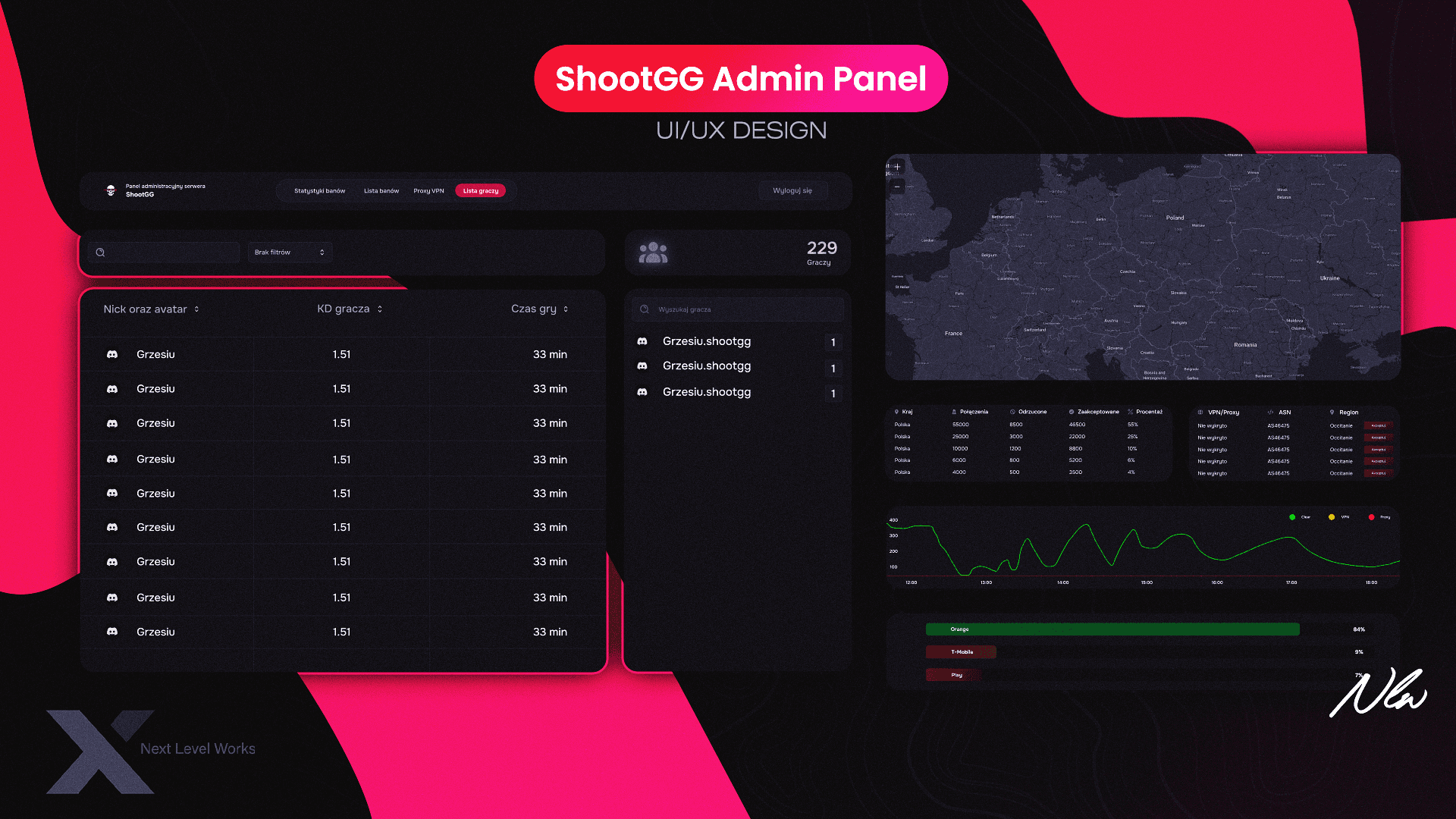
Production work
From administration panels to interfaces inside the game. Every screen comes from a defined delivery scope and leads to a full case study.
View all case studiesDelivery standard
Every scope follows the same delivery order, so the result is maintainable after launch.
Before the build, we define dependencies, ownership boundaries and the data flow.
We design NUI and panel states around quick decisions for players and administrators.
We verify logic, permissions, edge cases and resource behavior on a dev server.
We finish with configuration, deployment documentation and a clear ongoing-support plan.
How we work
We match the model to the server's maturity and the scope of change. Not every problem needs a large custom build.
Modular solutions developed by the same team responsible for implementation and support.
Explore productsGameplay systems, panels, NUI and integrations built around your server and roadmap.
Explore the scopeReserved team capacity, a delivery roadmap, hotfixes and support after release.
See the modelOur products
Both products are currently in pre-launch. We show their real direction and keep an open waitlist without pretending they are generally available.
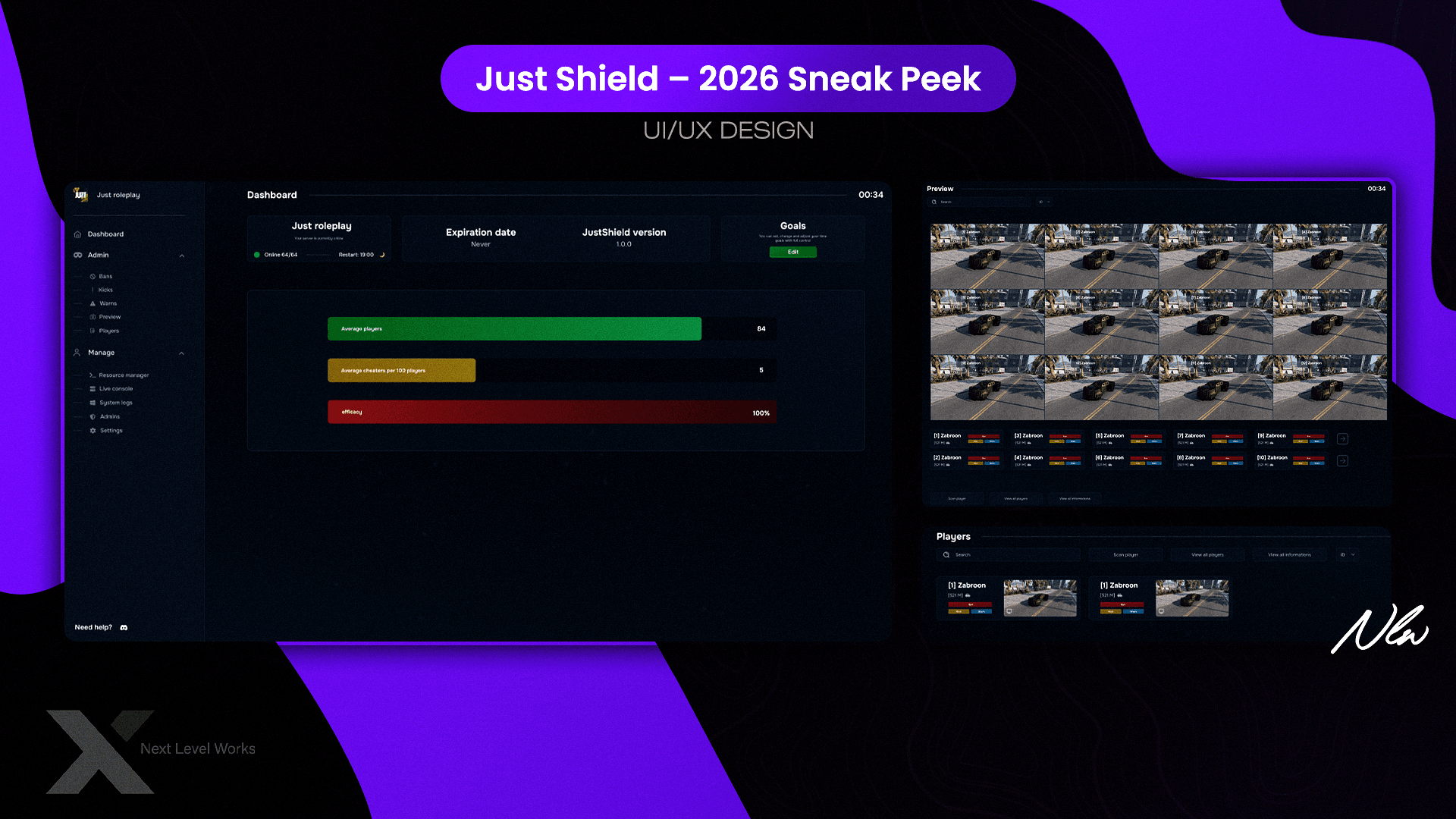
A security layer and event review panel for FiveM servers.
Event validation, suspicious trigger queues, logs and review tooling in one product built around real administration needs.
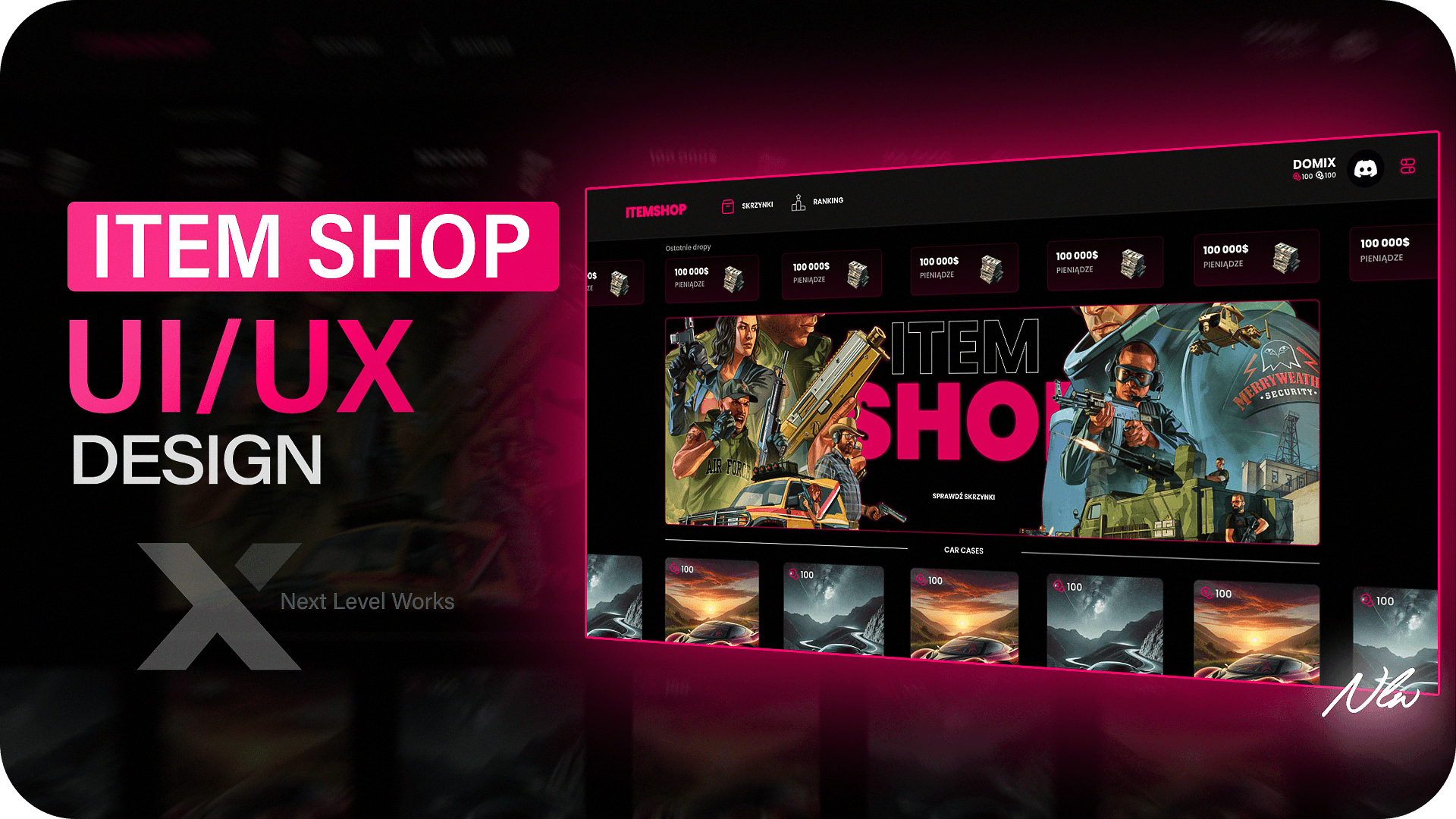
Modular systems for teams that want to launch proven features faster.
A family of configurable modules for onboarding, administration, vehicles, factions and businesses, supported by the custom development team.
Custom development
We keep FiveM backend, web and UI in one scope of responsibility so logic, interfaces and integrations do not drift apart.
Gameplay logic, economy, factions, businesses and server tooling for ESX, QBCore and standalone.
Interfaces designed around player and admin tasks, with clear states and efficient rendering.
APIs, databases, Discord, Tebex, Steam, logs, permissions and deployment flows.
Server-side validation, event controls, tick profiling and risk reduction before release.
Process and quality
Every stage has an outcome and acceptance criteria. A screen, animation or endpoint is not done just because it works locally.
We capture context, constraints and the outcome the system needs to achieve.
We define architecture, risks, delivery stages and acceptance criteria.
We ship iteratively and test logic, UI and live server behavior.
We hand over documentation, support deployment and plan the next stage.
Critical actions are validated server-side with event and permission controls.
We profile ticks, queries and data flow before release, not after player complaints.
Delivery ends with documentation, configuration and clear ownership of ongoing support.
Ongoing partnership
For live servers we maintain a roadmap, reserve team capacity and own the next delivery stages without restarting vendor selection each time.
See the partnership modelEngagement
A public floor helps both sides qualify the fit. Final custom development pricing follows the brief and risk review.
Architecture, performance and security review with an action plan.
ExploreA system, panel or integration with delivery stages and acceptance criteria.
ExploreReserved capacity, roadmap, hotfixes and future releases.
ExploreFAQ
Yes. We can start with one resource audit or take ownership of a larger part of the current architecture.
We work with all three. For mixed environments we define a bridge layer before development starts.
We define scope, risks and acceptance criteria first. Audits start at PLN 1.5k and custom development at PLN 3k.
The handover scope is defined in the offer. Deployment instructions, configuration documentation and team handover are standard.
Yes. A project can include a stabilization period or move into an ongoing development agreement.
Describe the current situation. We will return with a proposed scope and next step.